Paint Transfer or a Deep Scratch? How to Tell Before You Pay for Repainting in Miami
Paint transfer or deep scratch? Learn the fingernail test, what the mark means, and when a Miami repair may preserve factory paint without a full repaint.
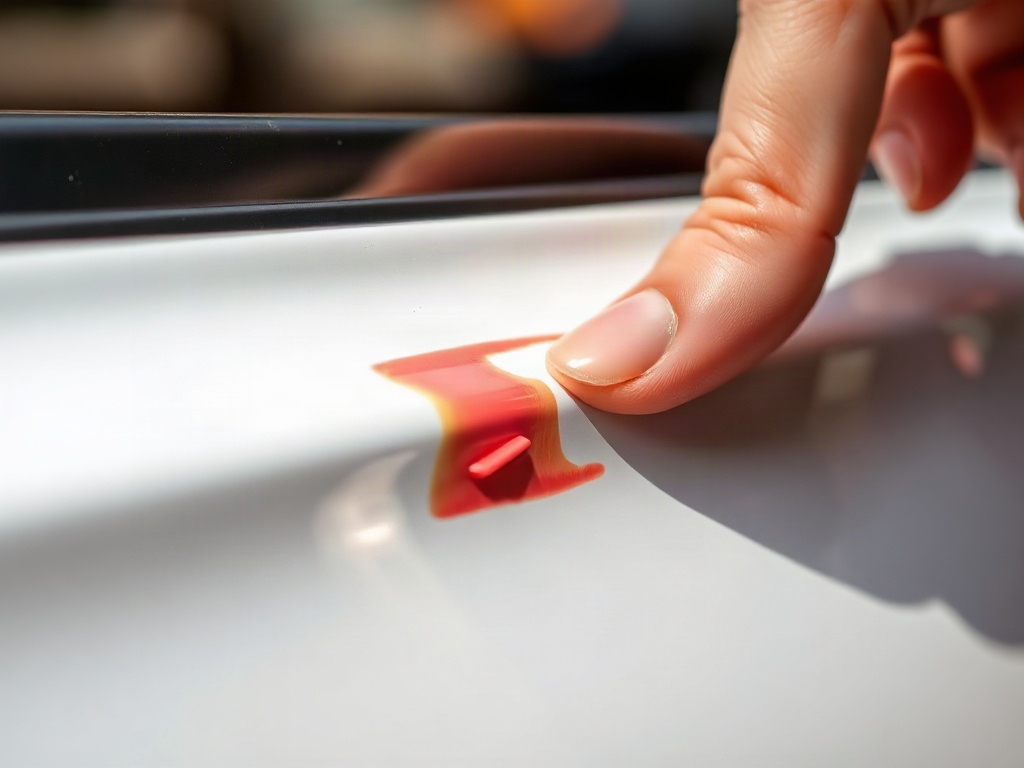
Clean and dry the mark, then run a fingernail gently across it. A raised deposit can indicate paint transfer on top of the clear coat; a groove that catches the nail suggests the coating has been cut and needs closer inspection before choosing correction or repainting.
- A fingernail that glides over a mark generally points to shallow clear-coat damage; a nail that catches suggests a deeper paint scratch.
- Light scratches, scuffs, blemishes, and paint transfer can be correctable on glossy paint and clear coat, depending on inspection.
- When transfer is superficial, correction may preserve the original paint and avoid an unnecessary full-panel repaint.
What Is Paint Transfer vs. a Deep Scratch?
Paint transfer is exactly what it sounds like: color from another object — a truck bumper, a pole, a shopping cart — smears onto your car's clear coat and bonds to the surface. Your own paint is intact underneath; you are looking at foreign material sitting on top.
A deep scratch is the opposite. Here an object has cut into or through your clear coat, base color, or even down to primer. Material has been removed from your car, not added to it. That difference is the whole ballgame when deciding between paint transfer removal and repainting.
The confusion is understandable because both often show up as a bright streak of the wrong color. But one is a coating problem and the other is a structural paint problem, and they cost very different amounts to fix.
The Fingernail Test: How to Read paint transfer or scratch in 30 Seconds
A useful at-home check starts with a clean, dry panel and a gentle fingernail pass across the mark. Do not press hard or test a dirty surface.
- You feel material raised above the surface: it may be transferred paint or another contaminant sitting on the clear coat.
- Your nail catches in a groove: the car's coating has likely been cut and the damage needs closer inspection.
- Your nail glides across with no catch: the mark may be a shallow clear-coat scuff that polishing can improve.
Progressive's guide to car-scratch depth similarly distinguishes shallow clear-coat marks from deeper paint scratches by whether a fingernail catches.
A Practical Car Scratch Assessment Miami Owners Can Do
The fingernail test tells you the category. These extra checks tell you the severity and guide your repair decision:
- Color of the mark: if the streak matches the other vehicle or object involved, it is almost certainly transferred paint on top of yours.
- Light angle test: view the panel under direct Miami sun and at a low angle. Transfer looks like a smear on the surface; a deep scratch shows a defined groove line with a shadow inside it.
- Wipe test: a light isopropyl-alcohol wipe (properly diluted) can lift loose residue. If the streak fades, you are dealing with surface transfer, not a gouge.
- Depth check: if you can see a lighter color inside the line — white or gray primer, or a metallic sheen — the scratch has cut through the color coat and is a deep car scratch in Miami terms.
If you're unsure whether the marks are just swirls, oxidation, or genuine defects, our guide on signs your car actually needs paint correction walks through the visual cues in more detail.
Repair Paths: What Each Diagnosis Means for Your Wallet
Once you know what you're looking at, the repair path — and the cost — becomes far clearer. Here is how the three most common outcomes compare.
| Diagnosis | Fingernail Result | Typical Fix | Needs Repaint? |
|---|---|---|---|
| Paint transfer on clear coat | Raised bump | Chemical removal + polish/correction | No, in most cases |
| Light surface scratch | No catch or faint catch | Machine polishing / paint correction | No |
| Deep scratch through color coat | Nail drops into a dip | Fill, sand, and respray at a body shop | Often yes |
| Scratch to primer/metal | Deep, sharp dip; different color inside | Body-shop refinish; possible panel work | Yes |
The takeaway for anyone budgeting a repair: first confirm whether the mark is foreign material, shallow clear-coat damage, or missing paint. Meguiar's product guidance identifies light scratches, scuffs, blemishes, and paint transfer as correctable defects on glossy paint and clear coat; deeper damage requires a different repair path.
Why Paint Transfer Removal in Miami Often Beats a Respray
When inspection confirms superficial paint transfer, a correction process may remove the foreign material and refine the clear coat without spraying new base color. The exact method should follow the condition and remaining thickness of the original finish.
Repainting, by contrast, means preparing the panel, spraying, and matching the existing color. Confirming the damage depth before authorizing work helps avoid choosing a full repaint for a mark that may be correctable.
Miami Armor — paint correction in US — approaches every mark with this diagnostic mindset first. You can learn how to weigh a mobile visit against a body shop in our breakdown of mobile scratch repair vs. a body shop in Miami.
The Limits: When Correction Can't Save the Panel
Paint correction and transfer removal work on the clear coat. They cannot rebuild paint that is gone. If your nail sinks into a defined groove, or you see primer or bare metal inside the line, no amount of polishing will fill it — that requires refinishing.
This is the same boundary we cover in whether paint correction removes deep scratches or just light swirls. Knowing the limit protects you from paying a detailer to attempt the impossible, and from paying a body shop for a job a detailer could have handled.
When in doubt, get a professional car scratch assessment in Miami before authorizing any work. A brief inspection can reveal whether the mark is a correction candidate or requires bodywork. You can start by exploring services and diagnostics at miamiarmor.us.
Quick Decision Checklist Before You Pay
- Wash the area, then run your fingernail across the mark.
- Bump = paint transfer; likely removable without repainting.
- Dip = deep scratch; may need filling or a respray.
- Different color inside the line = paint is gone; refinishing needed.
- Streak wipes away with diluted alcohol = surface transfer, not a gouge.
- Still unsure? Get a professional assessment before approving any quote.
Content prepared by the Miami Armor team. 2026.