Mobile Scratch Repair or a Body Shop? How to Choose in Miami
Mobile scratch repair or body shop in Miami? Learn how scratch depth, exposed paint layers, dents, and factory finish determine the right repair path.
Choose a mobile scratch-repair assessment in Miami for light clear-coat marks, paint transfer, scuffs, and localized cosmetic damage. Choose a body shop or collision specialist when metal is exposed, paint is cracked or peeling, the damage is extensive, or the panel has structural deformation. A fingernail test is useful triage, but inspection — not the nail test alone — determines the repair.
- Light clear-coat marks, paint transfer, and localized scuffs may be repairable on-site while preserving the factory finish.
- Exposed metal, cracked or peeling paint, extensive damage, and structural deformation call for body-shop or collision-specialist evaluation.
- A scratch that catches a fingernail needs closer inspection, but it does not automatically prove that the whole panel must be repainted.
What Is Mobile Scratch Repair?
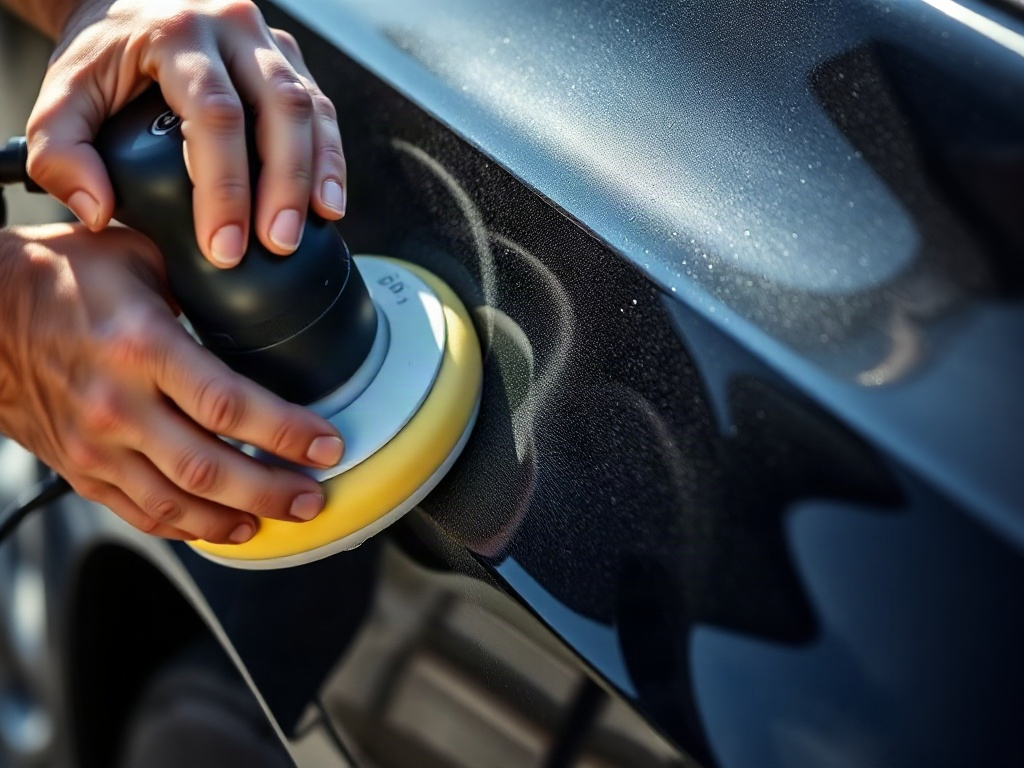
Mobile scratch repair is a service that comes to your location — home, office, or parking lot — and corrects surface damage without taking the car to a facility. Technicians erase key scratches, parking-lot scuffs, and light surface damage using machine polishing, clear-coat wet-sanding, and blending techniques.
The goal is to correct the paint you already have rather than replace it. When a scratch sits inside the clear coat, a skilled technician can level and refinish that layer so the mark disappears — no repaint, no color-match risk, no lost factory finish.
That distinction matters. A body shop or scratch repair decision usually comes down to whether the original paint can be saved or has to be sprayed over. At Miami Armor, we first assess the affected paint layer, the size and location of the damage, and the condition of the surrounding finish before recommending correction or refinishing.
Body Shop or Scratch Repair: How to Tell Which You Need
Use the fingernail test as an initial check. If your nail does not catch, the mark may be limited to the clear coat or may be transferred material that polishing can improve. If your nail catches, the damage is deeper than a light surface mark and needs closer inspection. As the RACV scratch-assessment guide explains, a catching nail suggests deeper damage, but the visible paint layer and surrounding condition still matter.
A Wired review of scratch-repair methods also notes that one scratch can vary in depth along its length, reinforcing why a simple test should not replace close inspection.
Look at the material visible inside the mark. A white or hazy line may be light scattering or transferred material, while visible primer, bare metal, cracked paint, or peeling edges indicate damage that polishing alone cannot restore.
For a deeper explanation of what polishing can and cannot remove, see our guide on whether paint correction removes deep scratches or just light swirls.
Choose Mobile Scratch Repair When
- The scratch is confined to the clear coat and your nail does not catch.
- You have swirl marks, buffer trails, or spider-webbing from washing.
- The damage is a scuff transferred from another surface rather than a gouge.
- You want to preserve factory paint and avoid a repaint.
- You value on-site convenience and a faster turnaround.
Choose a Body Shop When
- The scratch reaches bare metal or shows primer.
- Damage spans a full panel or multiple panels.
- The scratch comes with a dent, crease, or structural deformation.
- Rust has started forming in an exposed groove.
- The panel needs filler, priming, and a color-matched respray.
Why Preserving Factory Paint Matters in Miami
The factory finish is applied under controlled manufacturing conditions. A professional repaint can look excellent, but it changes the panel's original finish and may be measurable with a paint-depth gauge. Preserving sound original paint is therefore preferable when a safe correction can achieve the desired result.
In Miami's climate, that original layer works harder. Intense UV, salt air near the coast, and humidity all stress a car's finish. Keeping the factory clear coat intact — rather than replacing it — helps the paint resist those elements the way it was engineered to. Our article on how Miami sun and humidity affect paint covers this in detail.
Mobile Scratch Repair vs Body Shop: Side-by-Side
| Factor | Mobile Scratch Repair | Body Shop |
|---|---|---|
| Best for | Clear-coat scratches, scuffs, swirls | Deep gouges, dents, panel damage |
| Factory paint | Preserved through correction | Often repainted / resprayed |
| Location | Comes to you on-site | Car dropped off at facility |
| Turnaround | Typically same-visit for surface work | Longer; depends on repaint and parts |
| Color-match risk | None — original paint stays | Possible with respray |
Mobile service is well suited to localized cosmetic work. Exposed metal or structural damage should be evaluated by a body shop or collision specialist. A dent with intact paint may also be a candidate for paintless dent repair, so a dent does not automatically mean repainting.
How to Choose a Provider in Miami
Whether you land on mobile scratch repair Miami services or a shop, evaluate providers with the same rigor. Before committing, make a list of questions and ask about their process, expected turnaround, and whether they can give a detailed estimate before starting work.
- Ask them to assess depth first. A trustworthy provider inspects the scratch before promising a result.
- Confirm the method. For surface scratches, correction and blending should be the plan — not an automatic repaint.
- Request a written estimate. Detailed pricing prevents surprises and reveals whether repaint is being upsold.
- Check specialization. A paint-correction specialist uses paint-depth assessment, controlled abrasion, wet sanding, and polishing to preserve usable paint; a collision center is equipped for filler, panel repair, priming, spraying, curing, and structural work.
- Review examples. Ask to see comparable before-and-after correction work.
For a broader vetting framework, our guide on signs that a car may need paint correction walks through the criteria step by step. You can also explore full service details at miamiarmor.us.
The Decision, Simplified
Start with the affected layer and the surrounding damage. Light clear-coat marks and paint transfer may be good candidates for mobile correction. Visible primer or metal, cracked paint, widespread damage, or structural deformation needs a body-shop assessment. If a dent is present but the paint is intact, ask whether paintless dent repair is appropriate.
Getting this call right saves money, protects resale value, and keeps your factory finish intact. When in doubt, get the damage assessed before authorizing any repaint — the assessment is where the right decision is made.
Content prepared by the Miami Armor team. 2026.