Should You Apply Touch-Up Paint Before Getting a Scratch Repair Quote in Miami?
Before using touch-up paint, learn what helps or hides a Miami scratch repair assessment, when bare metal changes the decision, and what photos to take.
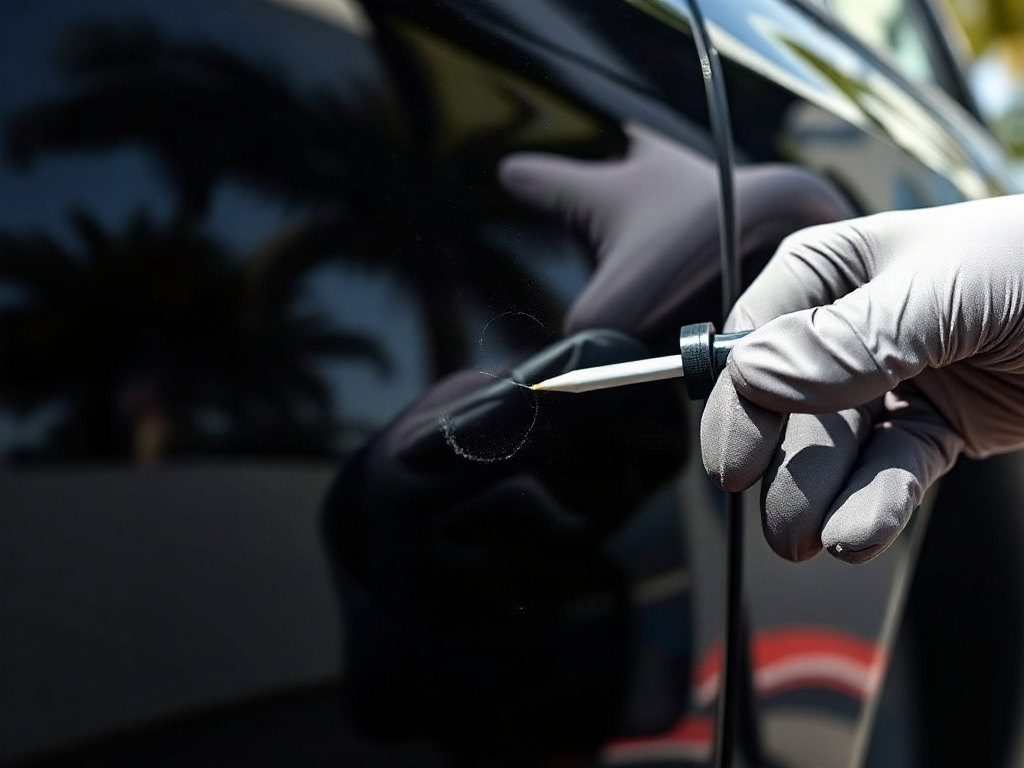
Usually, get the scratch assessed before applying touch-up paint. A clean, dry, unaltered view helps a technician see the edges, depth, paint transfer, and any exposed substrate. If bare metal is visible or the quote will be delayed, ask a qualified repairer or the vehicle manufacturer how to protect the area temporarily, and disclose anything you apply.
- Clean and photograph the damage before adding paint, compound, sanding, or other products.
- Use the vehicle paint code if touch-up is later chosen; color names alone may not identify the correct formula.
- Visible bare metal, cracked paint, a dent, or damage near sensors deserves prompt professional assessment rather than a cosmetic guess.
The practical problem is timing. A driver wants to protect or hide a mark immediately, while a repairer needs to understand what happened before recommending polishing, touch-up, localized refinishing, or body-shop work. Those goals are compatible if the assessment comes first—or if any temporary treatment is documented.
What does touch-up paint change before a quote?
Touch-up paint adds material over a chip or scratch. That may be appropriate as a later repair step, but it can make a photo or quick inspection harder to interpret because the original edges, color transfer, and exposed layers are less visible.
This does not mean touch-up paint always “ruins” a repair or automatically raises the price. The effect depends on the product, application, damage, and repair method. The safer decision is to preserve evidence until the repairer has enough information to recommend the next step.
Autotrader's touch-up guidance starts with evaluating the damage and locating the vehicle's paint code before applying paint. That order matters: identify the defect and correct color first, then choose the treatment.
The Miami information gap: what to do before the estimate
Local scratch-repair pages commonly explain services or invite a quote. Broad DIY articles commonly explain how to apply paint. The missing decision guide is what a Miami owner should do in the hours or days before an assessment—especially when heat, rain, outdoor parking, and a mobile estimate affect timing.
The answer is not a blanket “never touch it.” It is a triage process:
- If the mark may be paint transfer or a shallow clear-coat defect, document it before aggressive cleaning or polishing.
- If paint is cracked or metal is exposed, obtain prompt advice about temporary protection and repair timing.
- If there is a dent, split plastic, loose trim, or damage near a camera or sensor, request a broader collision/body assessment.
For a visual starting point, compare paint transfer with a deeper scratch. If the repair path is unclear, use our guide to mobile scratch repair versus a body shop in Miami.
What to do before requesting a scratch repair quote
- Rinse and gently wash the area. Remove loose dirt with normal car-wash methods; do not scrape the mark or use an unknown solvent.
- Dry it completely. Water can temporarily change how a defect looks in photos.
- Photograph before treatment. Take one wider image showing the panel and several close images from different angles in daylight. Include a familiar object for scale without touching the damage.
- Record what happened. Note the approximate date, contact with another object, and any product already used.
- Check for escalation signs. Look for exposed metal, cracked or lifting paint, deformation, loose parts, or nearby sensors.
- Send the photos and ask what not to apply. A mobile technician or body shop can say whether an in-person inspection is needed and whether temporary protection is appropriate.
- Keep the paint code available. The code is normally found on a vehicle label or through manufacturer/dealer information; it is more reliable than choosing by color name alone.
Why clean inspection matters
Professional repair systems begin with cleaning and inspection. For example, 3M's collision-repair guidance emphasizes inspecting paint under suitable light and using controlled preparation steps. Its bumper repair procedure notes that cleaning can reveal additional damage that dirt had hidden.
That is the principle to borrow—not a DIY instruction to sand or compound the panel. Good photographs of a clean surface allow a repairer to decide whether remote estimating is reasonable or whether hands-on inspection is necessary.
When touch-up may be reasonable before the appointment
| Situation | Best next step | Why |
|---|---|---|
| No exposed substrate; appointment soon | Photograph and wait for assessment | Preserves the clearest view of the original defect |
| Bare metal appears visible | Photograph, then request prompt protection advice | Timing and product choice may matter more than cosmetics |
| Paint already applied | Do not hide it; identify the product and date | Helps the repairer plan preparation accurately |
| Dent, cracked plastic, loose part, or sensor area | Request body/collision assessment | The issue may extend beyond surface paint |
If a professional recommends temporary touch-up, follow the relevant product and vehicle instructions. Do not assume a universal drying time, layer count, or sanding method. Those details vary by system and damage.
Questions to ask before accepting the quote
- Is this paint transfer, a clear-coat defect, a chip, or damage through the color layer?
- Can the area be improved without refinishing the full panel?
- Does the estimate include preparation of any touch-up paint already present?
- Is the quote based only on photos, and what could change after in-person inspection?
- Does adjacent dent or sensor damage require another specialist?
Miami Armor offers scratch and paint-condition assessment through miamiarmor.us. Provide clean daylight photos and disclose prior products so the recommendation can be based on the visible condition.
Bottom line
For most cosmetic marks, document first and apply paint second. A clean photo set and a short history give the estimator more useful information than a freshly covered scratch. If metal is exposed or the damage involves deformation, loose parts, or sensors, seek prompt professional guidance instead of relying on a cosmetic touch-up.
Content prepared by the Miami Armor team. Updated August 28, 2026.