Can Paint Correction Remove Oxidation and Faded Clear Coat on Florida Cars?
Oxidation removal and faded clear coat in Florida: what paint correction can improve, when to refer to a body shop, and how inspection decides the outcome.
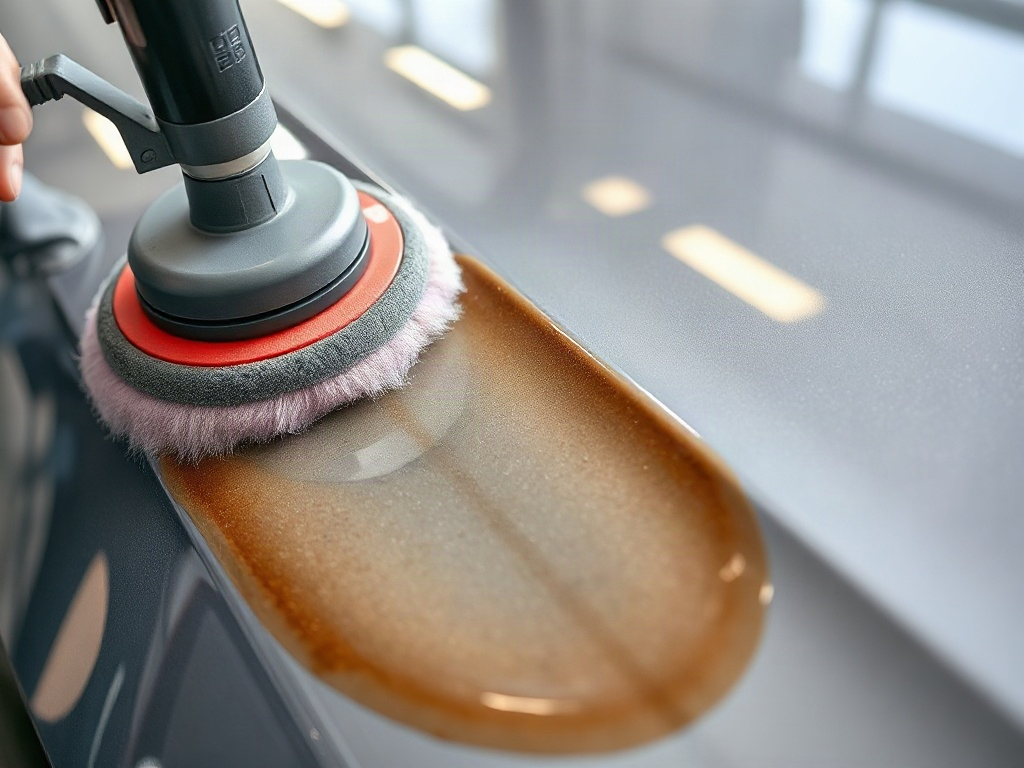
Paint correction can often reduce light-to-moderate oxidation and bring back gloss on faded paint when the clear coat is still present and intact — but it cannot rebuild peeling, missing, or separating clear coat, which needs refinishing. The realistic outcome depends on an in-person inspection, not on photos.
- Paint correction refines defects the existing paint can safely support and does not replace peeling or missing clear coat.
- 3M describes compound as an aggressive step that cuts the top surface of paint, while polish is a less aggressive step used to achieve high gloss.
- 3M notes a real risk of paint burn-through during aggressive correction, so the least aggressive effective method is used first.
What Is Oxidation and Faded Clear Coat?
Oxidation is the visible dulling, chalkiness, or hazy film that appears on a car's finish over time. On clear-coated paint, it usually sits in or on the top clear layer that protects the colored basecoat beneath.
Faded clear coat is a related but broader term. It can describe a finish that has lost gloss and depth while the clear is still intact, or a clear coat that has begun to fail — peeling, flaking, or separating from the layers below.
That distinction matters because the two situations call for different work. One can often be improved by polishing; the other typically cannot be corrected and needs a body shop or refinisher.
Can Paint Correction Actually Remove Oxidation?
Paint correction is an abrasive refinement process. According to 3M, paint finishing systems use fine abrasives and finishing materials to remove or refine defects in existing painted surfaces, per 3M's surface repair and correction materials.
In practice, that means correction removes a very thin amount of the top surface to level defects and restore clarity. 3M describes compound as an aggressive liquid designed to cut the top surface of paint, and polish as a less aggressive step used to achieve high gloss, as shown on 3M's compounds and polishes page.
When oxidation is confined to a healthy, intact clear coat, this process can often reduce the haze and recover gloss. When the clear coat itself has failed, there is no sound surface to refine — polishing a failing layer does not restore it.
For that reason, no honest shop can promise complete oxidation removal or guaranteed restoration before inspecting the vehicle. The result depends on how much sound material remains.
Why Photos Cannot Answer the Question
Owners and dealerships often ask for a firm answer from photos. Photos are useful for a first-pass triage, but they cannot prove defect depth, coating history, or how much safe material remains in the paint.
Gloss, color, chalkiness, and even a tactile feel can hint at the condition, but none of them proves how deep the damage goes. That is why a proper assessment is done in person. If you are weighing a remote estimate, see our guidance on getting an accurate quote from photos before you commit.
How a Careful Correction Decision Is Made
The safest approach uses the least aggressive test that can answer whether useful improvement is possible. A small test section is corrected first, then evaluated before committing to the whole panel or vehicle.
- Inspect the finish and identify whether the clear coat is intact or failing.
- Run a small test area with the mildest effective step to gauge response.
- Evaluate the improvement against the risk of removing too much material.
- Stop when further correction would create undue risk.
- Refer peeling, missing, separating, or failed clear coat to a body shop or refinisher.
This staged method exists because 3M notes a risk of paint burn-through during aggressive work. Cutting too hard, too fast can create a worse problem than the oxidation itself, so restraint is part of the craft.
When Correction Works vs. When You Need a Body Shop
The line between correction and refinishing comes down to whether the existing paint can safely support the improvement. Miami Armor paint correction is limited to defects the existing paint can safely support and does not replace peeling or missing clear coat.
| Condition | Likely Path | Why |
|---|---|---|
| Light haze on intact clear coat | Paint correction may improve it | Sound surface can be refined to recover gloss |
| Moderate oxidation, clear coat intact | Correction possible, depends on inspection | Test section shows how much material remains |
| Peeling or flaking clear coat | Body shop / refinisher | No intact surface to polish; must be repainted |
| Clear coat separating from basecoat | Body shop / refinisher | Correction cannot rebuild missing layers |
If you are unsure which category your vehicle falls into, our comparison of mobile repair versus a body shop can help you decide before booking anything.
A Note for South Florida Owners
Cars in South Florida live outdoors in a demanding environment, and owners frequently ask whether the climate is to blame for a specific dull finish. We do not assign a single cause to any one vehicle's condition without inspecting it — the honest variables are what the paint shows and what safe material remains.
What we can say is that the decision process stays the same: assess, test conservatively, improve what is safe to improve, and refer failed clear coat to a refinisher. Miami Armor — paint correction in US — follows that boundary on every job across the region. You can review our full paint correction service and the South Florida service areas we cover.
Pairing Correction With Protection
Once a finish has been corrected, many owners want to preserve the improved gloss. Correction and a protective coating are often discussed together, and our guide on the paint correction and ceramic coating combo explains how to sequence them correctly.
Protection does not reverse oxidation or replace failed clear coat, but it can help maintain a corrected surface. The right combination should still start with an inspection to confirm the paint is a good candidate for correction in the first place.
How to Get an Honest Assessment
The fastest way to know whether your oxidation or faded finish can be improved is a hands-on evaluation. Reach out through the contact page to arrange one, and learn more about the company at miamiarmor.us.
Expect conditional guidance rather than absolute promises. Whether correction can help, and how much, always depends on what the inspection reveals about your specific paint.
Content prepared by the Miami Armor team. 2026.