Plastic Bumper vs Painted Panel Scratches in Miami: Why the Repair Approach Differs
Plastic bumper vs painted panel scratches in Miami: why repair approaches differ. Learn when polishing may help and when a body-shop assessment is needed.
The repair approach differs because coating condition and damage depth—not the substrate itself—decide what is possible: superficial clear-coat marks on painted plastic or painted metal may be polished after inspection, while cracks, peeling, exposed substrate or deep gouges need a professional assessment.
- Substrate alone (plastic bumper vs metal panel) does not determine the fix; coating condition and how deep the damage goes matter more.
- Many painted bumpers have basecoat and clearcoat, so superficial clear-coat marks may be polished after a proper inspection.
- Color and whether a fingernail catches cannot reliably diagnose depth; a white mark may simply be paint transfer, and photos give only a preliminary read.
Plastic Bumper vs Painted Panel Scratches in Miami: Why the Repair Approach Differs
Miami-Dade and Broward drivers often assume a plastic bumper scratch and a painted-door scratch are two different repair worlds. In practice, the deciding factors are the same for both: is the clear coat intact, and how deep does the mark go? Those two answers guide whether polishing is realistic or whether the panel needs a hands-on body-shop-style assessment.
At Original Paint Rescue (formerly Miami Armor), the goal is to preserve original factory paint wherever the damage allows, because keeping OEM finish is almost always preferable to refinishing. But that preference only holds when the damage is genuinely superficial.
Can a painted plastic bumper be polished?
Often, yes—when the marks sit in the clear coat and the coating is otherwise sound. Many painted bumpers are finished with a basecoat and clearcoat, similar in principle to painted metal panels. That means light scuffs and clear-coat scratches on a painted plastic bumper may respond to careful polishing, just as they can on a painted fender or door.
What you should not assume is that all bumpers share identical coating systems, thickness, or hardness. Flexible plastic substrates, additives, and repair history vary from car to car. That is exactly why an inspection matters before anyone commits to a polishing plan versus a refinish plan.
Painted plastic, painted metal, and unpainted textured trim are not the same
It helps to think in three categories rather than "plastic vs metal":
- Painted plastic (most body-color bumpers): superficial clear-coat marks may be polishable after inspection.
- Painted metal (doors, fenders, hoods): the same clear-coat logic applies—depth and coating condition decide.
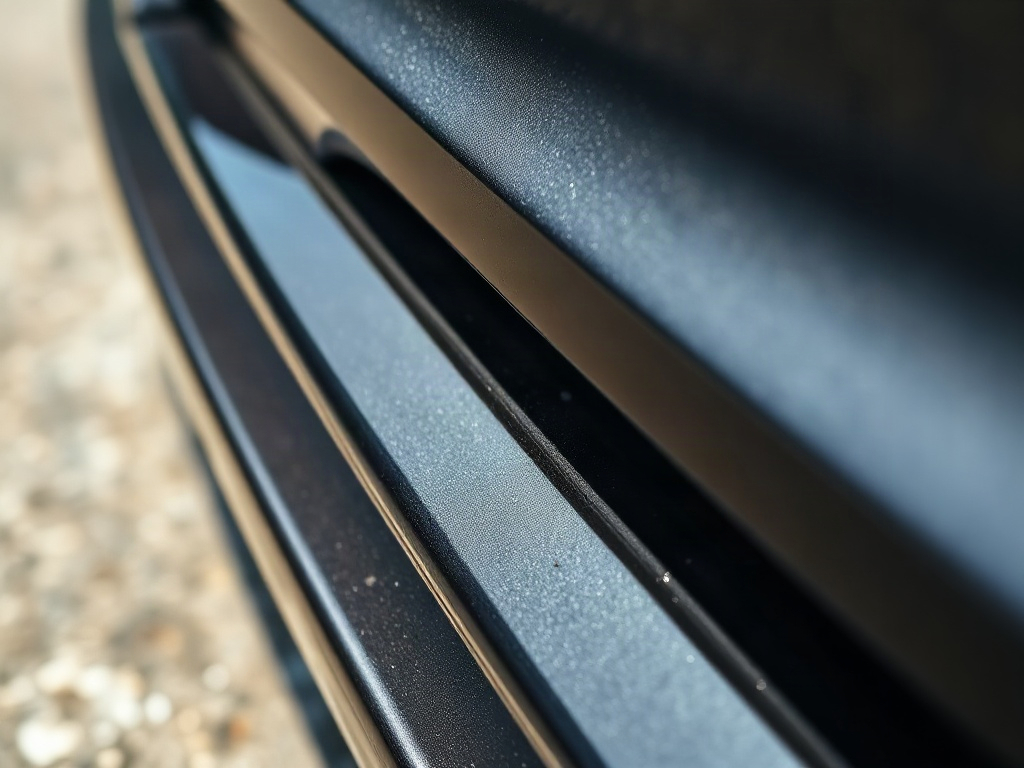
- Unpainted textured trim (matte black lower bumpers, cladding, mirror caps): these have no glossy clear coat to correct, so polishing behaves differently and aggressive buffing can worsen the texture.
Confusing textured trim with painted plastic is a common Miami mistake. A scratch on matte cladding is not treated the same way as a scratch on a glossy body-color bumper.
Which damage needs a professional inspection instead of polishing?
Polishing removes a tiny amount of clear coat to level minor marks. It cannot rebuild missing material. Send it for professional, OEM-appropriate assessment when you see:
- Cracks or splits in the bumper or panel.
- Peeling or lifting clear coat.
- Exposed primer, plastic, or bare metal at the bottom of the scratch.
- Deep gouges that clearly reach past the clear coat.
Not every scratch needs filling or full refinishing, and not every scratch can be polished away either. The honest answer usually requires seeing the panel. For plastic-specific and OEM considerations, 3M outlines damage-specific plastic and bumper repair guidance in its bumper and plastic repair resources.
Why color and the fingernail test mislead you
Two myths cause bad decisions. First, a white or light-colored line does not automatically mean deep damage—on a colored car it is frequently paint transfer from another object, which can look alarming but sit on the surface. If you want to understand that distinction before paying for anything, see our guide on paint transfer or a deep scratch.
Second, running a fingernail across a scratch to "measure" depth is unreliable and, on a flexing bumper, pressing or bending damaged plastic can make things worse. Depth is best judged under proper light and inspection, not by feel.
How photos help—and their limits
Clear photos let Original Paint Rescue give a preliminary read on whether a scratch looks like a clear-coat mark or something deeper before you drive anywhere. A photo assessment is preliminary only; a physical inspection can change the recommendation once the panel is seen in person. For realistic expectations on remote quoting, read whether you can get an accurate scratch repair quote from photos in Miami.
Photo preparation checklist
- Wash and dry the area so grime is not mistaken for damage.
- Shoot in bright, even daylight—avoid harsh direct sun glare and deep shade.
- Take one wide shot showing the whole panel or bumper, then close-ups of the scratch.
- Capture the damage from a straight-on angle and again at a slight angle to reveal depth.
- Include a nearby edge, badge, or trim line for scale, and note whether any color, primer, or bare substrate is visible.
Do not sand, heat, apply touch-up paint, or flex the bumper before assessment—those steps can limit the least invasive options.
Submit your photos for a preliminary assessment
If you are in Miami-Dade or Broward and unsure whether your bumper or panel scratch calls for polishing or a body-shop-level look, send photos to Original Paint Rescue for a preliminary assessment. Because the service is mobile across South Florida, the aim is to protect original paint whenever the damage allows and to flag clearly when deeper repair is the honest path.
FAQ
Can a plastic bumper scratch be polished like a painted metal scratch?Sometimes. If the mark is in the clear coat and the coating is sound, a painted plastic bumper may be polished much like painted metal. Cracks, peeling, exposed substrate, or deep gouges usually need professional assessment instead.
Does a white scratch mean the damage is deep?Not necessarily. On a colored car a white line is often paint transfer sitting on the surface. Color is not a reliable depth gauge, so it is better confirmed by inspection than by assumption.
Is the fingernail test a good way to check scratch depth?No. It is unreliable, and pressing or flexing a damaged bumper can worsen it. Depth is best judged under proper lighting and a physical inspection rather than by feel.