Car Paint Feels Rough After Washing: Clay or Polish?
Car paint feels rough after washing? Separate bonded contamination from paint defects before choosing clay, chemical cleaning or polishing.
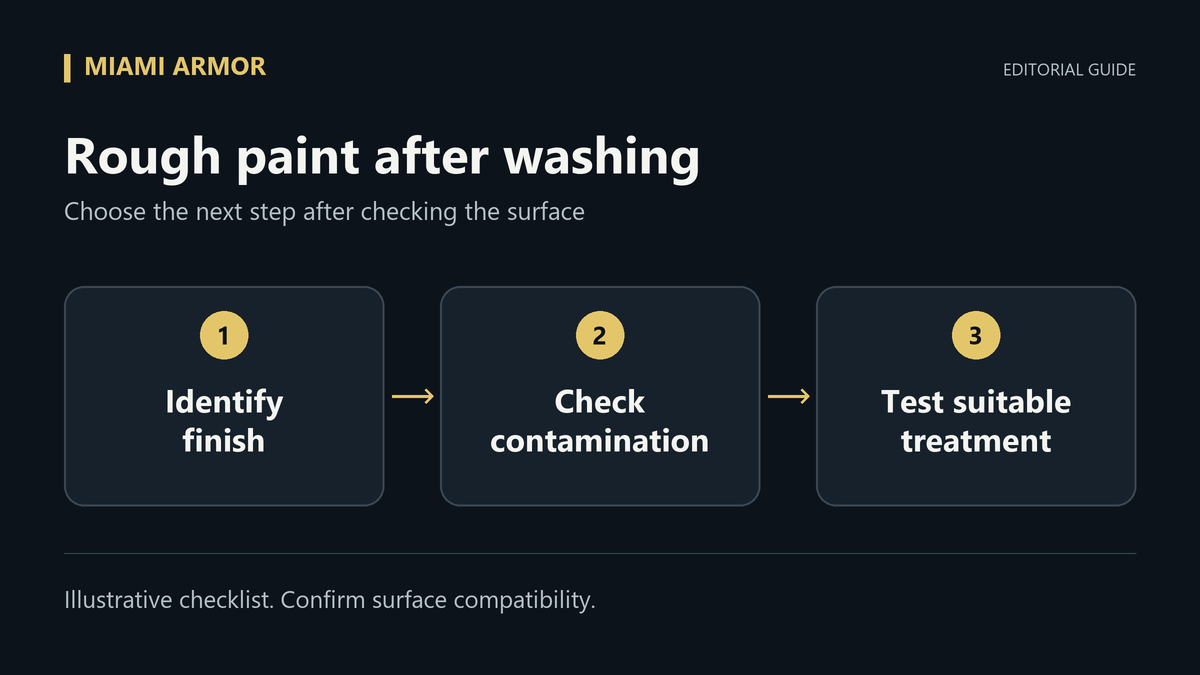
If your car paint feels rough after washing, bonded contamination is one possible cause; roughness alone does not prove that the paint needs polishing. Identify the finish, check what remains after a compatible wash and separate material on the surface from defects in the paint. Choose further cleaning or correction only after that assessment.
The distinction matters because a car can look glossy and still have deposits on its surface. It can also feel smooth while visible swirls remain. Buying a stronger polish for either condition skips the question that should come first: what are you actually trying to remove?
This guide is for deciding on the next assessment. It is not a universal chemical recipe or an instruction to clay every car that feels imperfect.
Identify the surface before choosing a treatment
Check whether the panel has conventional gloss paint, a matte or satin finish, paint protection film, a wrap or a coating. If you do not know, look for the installation invoice or ask the previous owner or installer. A treatment suitable for one surface may be unsuitable for another.
Our guide to matte and satin paint before polishing explains why those finishes need a separate decision. Do not test a general gloss-restoration product on an unknown finish simply because its label mentions cars.
Also note recent repainting or previous correction. Share that history with the assessor. Surface texture, product compatibility and paint condition should be considered together, rather than using a smoothness test as permission for abrasive work.
Roughness and swirls are different observations
Meguiar's FAQ distinguishes bonded above-surface contaminants from swirl marks: its explanation says clay is intended to remove contaminants such as overspray and fallout, rather than remove swirls. That distinction is more useful than treating every finish problem as a polishing problem.
| Observation after a suitable wash | What it may indicate | Useful next step |
|---|---|---|
| Specks or an uneven feel on an otherwise glossy area | Deposits or bonded contamination | Identify the material and a compatible removal process |
| Visible circular marks but no obvious deposits | Surface marring or other paint defects | Inspect the finish and discuss a limited correction test |
| Raised spots after nearby painting or construction | Possible overspray or another deposit | Document the circumstances and get the material assessed |
| Peeling, cracking, exposed layers or lifting edges | A finish or material problem beyond ordinary cleaning | Stop cosmetic experimentation and seek the appropriate specialist |
These are possibilities, not remote diagnoses. Do not scratch at a speck, rub a dry panel or repeatedly drag your hand over grit. A tactile impression cannot establish chemical identity, paint depth or whether a coating remains intact.
Chemical cleaning, clay and polish have different jobs
Chemical decontamination uses a product selected for a particular contaminant and compatible surface. For example, Meguiar's Iron Removing Spray Clay product information describes a non-abrasive treatment for iron-based contamination and industrial fallout. An iron remover is not a universal answer to sap, unknown paint overspray or a defect beneath the surface.
Mechanical clay treatment is intended to remove bonded material. Selection, lubrication and technique matter, and the vehicle or protection manufacturer may impose additional restrictions. A generic claim that a product is paint-safe does not establish suitability for every film, matte finish, repaired panel or coating.
Abrasive polishing addresses eligible defects by refining the finish. It is a separate intervention, with a limit set by the actual paint condition. It should not be added automatically because contamination was found or because a package includes a polishing stage.
Vehicle instructions can be restrictive. Tesla's Model Y cleaning manual calls for removing grit before washing and warns against harsh abrasives. Those are instructions for that vehicle; check the current manual for yours before selecting products or methods.
Use a diagnosis-first appointment brief
Instead of booking “a clay and two-stage correction” from the description alone, send an assessor a short brief:
- What changed? Say when you first noticed the roughness and whether the car was parked near painting, construction or another possible source.
- Where is it? Identify the roof, hood, lower panels or other affected areas. Include a wider photograph and useful close views.
- What is on the surface? List known paint protection, film, wraps and recent repairs. State clearly when something is unknown.
- What has been used? Name the shampoo, cleaner, clay or polish already tried. More treatment can make the starting condition harder to understand.
- What outcome matters? Explain whether you want easier maintenance, preparation for protection or assessment of a visible defect.
A photograph may not show texture well. Describe it without adding a diagnosis such as “definitely rail dust.” The goal is to help the professional select a controlled inspection, not to lock the job into your first theory.
Decide what follows the test area
Ask the provider to explain what a small treatment area showed. Did the identified deposit release? Is the underlying finish acceptable? Are marks still visible after appropriate cleaning? Does the remaining problem need another specialist?
For example, an illustrative car might have rough deposits on the hood but an acceptable finish beneath them. A different car could have both contamination and visible swirls. The same initial symptom would lead to different scopes. These are examples of the decision process, not reported Miami Armor customer results.
If correction is still appropriate, our paint correction service path explains the inspection, test and agreed finish target. If cleaning resolves the concern, ask what protection or maintenance is appropriate afterward instead of assuming another polishing stage is necessary.
Questions about rough paint
Does rough paint always need a clay bar?
No. First identify the surface and likely contaminant. The appropriate response may involve a compatible chemical cleaner, mechanical treatment, another repair assessment or no additional work after proper washing.
Will clay remove swirl marks?
Clay targets bonded surface contamination. It is not a substitute for assessing swirl marks and deciding whether paint correction is appropriate.
Can I use an iron remover on every rough panel?
Do not assume so. Match the product to the suspected material, check the current label and vehicle or surface instructions, and confirm compatibility. Do not improvise concentrations or mix chemicals.
Should paint feel perfectly smooth before coating?
The preparation requirements belong to the actual coating and surface condition. Tell the installer about remaining contamination or texture and ask how it will be assessed. A hand test alone does not establish coating readiness.
If the roughness remains unexplained, send Miami Armor photos and the vehicle's surface history. Include your South Florida location and what you have already used so the next inspection starts with useful evidence.