Can a Previously Polished Car Be Polished Again? Questions to Ask Before Scratch Removal in Miami
Can a previously polished car be polished again in Miami? Learn the history checklist, inspection questions, and scope talks to ask before scratch removal.
A previously polished car needs an assessment of its current finish before another correction is chosen. Ask what the available history and measurements establish, what remains uncertain, and which scope preserves the finish without promising every mark will disappear.
- Abrasive polishing removes coating material; prior work and current condition matter when assessing further correction.
- Common magnetic and eddy-current paint gauges measure combined coatings above metal, not the isolated remaining clear coat. There is no universal safe thickness number or fixed polishing-count rule; a written scope helps clarify the agreed work and remaining uncertainty.
The real question before another paint correction is not just whether it can be done, but whether it should be done without first understanding what the surface has already been through. Each correction is a judgment call, and that judgment improves dramatically when you arrive prepared.
Bring the history of earlier paint work
The single most useful thing you can bring to a consultation is the paint history of the car. If you have invoices, service records, or before-and-after photos from a previous polish or detail, bring them. They may document previous procedures, but usually cannot establish exactly how much coating was removed.
Try to recall or document anything you know about earlier work: a full polishing session, spot wet-sanding on a specific panel, or a repaint after a collision. A repainted panel can behave very differently from factory paint during correction, so knowing which panels were touched is valuable.
If you bought the car used and know nothing about its paint history, that is a legitimate and common situation. Unknown stays unknown, and you should say so plainly rather than guess. A good inspection is built to work with uncertainty, not to pretend it away.
Finally, define your own objective before you arrive. Decide which panels concern you most and what outcome matters to you, whether that is reducing visible swirls, addressing a few specific scratches, or improving overall gloss. Clear goals let the conversation focus on realistic results instead of vague promises. Include this history and objective when you contact Original Paint Rescue, and ask which details the assessment needs. If you are unsure whether correction is even the right service, this guide on how to know if your car actually needs paint correction is a useful first read.
Understand what the inspection can establish
Paint correction is an abrasive process. Polishing removes a thin layer of material to level the surface and remove defects, which is exactly why a previously polished car deserves extra caution. What was removed before cannot be put back.
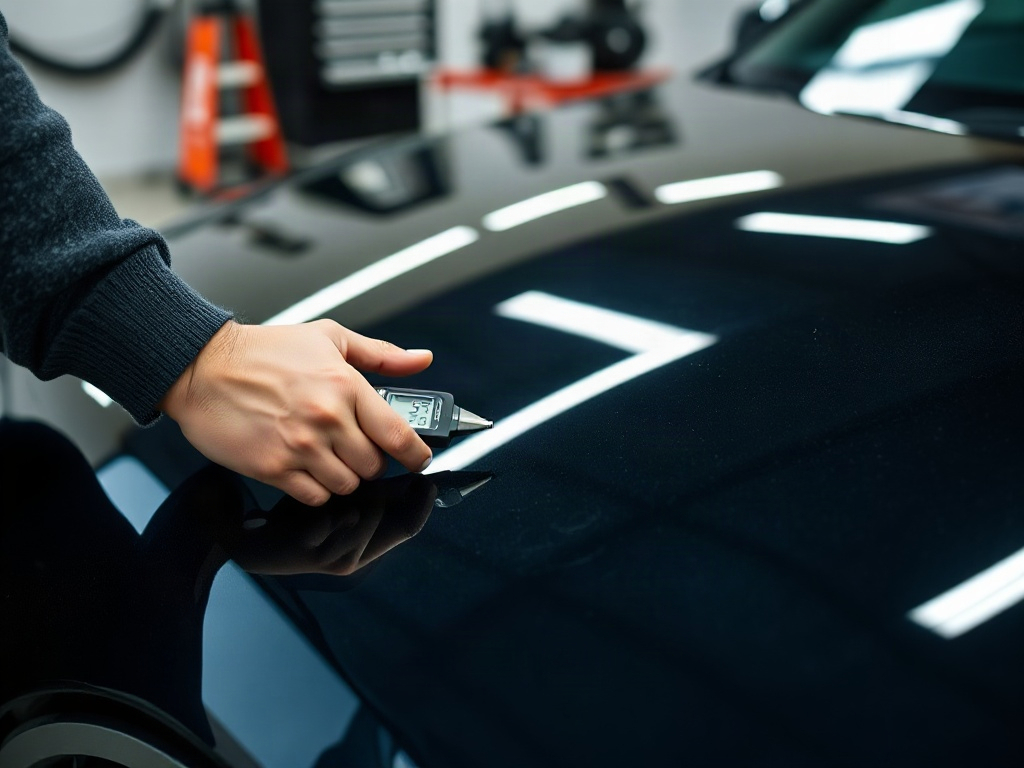
Many owners assume a thickness gauge can simply read the remaining clear coat and settle the question. It cannot read it in isolation. Common magnetic and eddy-current paint gauges measure combined coatings above metal, not isolated remaining clear coat, according to DeFelsko. A gauge gives a data point, not a verdict.
The correct instrument also depends on the substrate beneath the paint. Panels over steel, aluminum, plastic, or carbon fiber do not all respond the same way to a given gauge, so readings must be interpreted in context rather than treated as a universal safety number.
This is why there is no universal safe polishing count and no single safe micron value that applies to every car. A responsible inspection combines measurements, visual assessment, and the paint history you provided to estimate risk, not to guarantee an outcome.
| Question to ask | What it can establish | What it cannot establish |
|---|---|---|
| What does the thickness gauge show? | Total coating thickness above the base metal, as a relative data point across panels | The exact remaining clear coat in isolation |
| How many times can this be polished? | A cautious opinion based on history and readings | A fixed, guaranteed safe number of corrections |
| Which substrate is under this panel? | Which gauge and approach are appropriate for interpretation | A single setting that applies to the whole car |
| Will every scratch come out? | Which defects are likely surface-level versus deeper | A promise that all damage can be safely removed |
If your main concern is deeper damage, it helps to understand the difference between light defects and deep scratches. This explainer on whether paint correction removes deep scratches or just light swirls sets realistic expectations before the inspection even begins.
Agree on a cautious scope before booking
Once the inspection is done, the goal is a clearly agreed scope rather than an open-ended promise. A good written quote should separate what improvement is genuinely expected from what remains uncertain, so you are not surprised later.
Ask the quote to distinguish a few things: focused treatment of specific panels or defects, an overall appearance assessment, and any separate assessment for repair that correction cannot address. These are different conversations, and bundling them vaguely hides risk.
A photo alone cannot establish that correction is safe. Images help describe a scratch and start a conversation, but they cannot measure coatings or reveal prior polishing. An in-person inspection is what turns a guess into a plan. If photos are part of your process, this piece on getting an accurate scratch repair quote from photos in Miami explains the limits honestly.
Consider a hypothetical: a Miami owner brings a used sedan with no records and a few noticeable swirls on the hood. The cautious path is not to chase every mark. It is to confirm which defects are safely correctable, agree to treat those, document what is being left alone, and prioritize preserving the paint that remains over maximizing shine in one session.
Preservation should always lead the decision. If the inspection suggests the paint has limited material left, the right answer may be a lighter, partial correction rather than an aggressive pass. Ask Original Paint Rescue to explain any recommendation to leave defects alone and the uncertainty behind the proposed work.
Before you book, confirm the arrangements in writing. Ask Original Paint Rescue to identify the proposed panels, expected improvement, remaining uncertainty and any work that should be avoided.
Content prepared by the Original Paint Rescue team. 2026.