Lease Return Scratches: What to Check Before Repair
Check your lease inspection report, paint condition and repair requirements before paying to remove lease return scratches in South Florida.
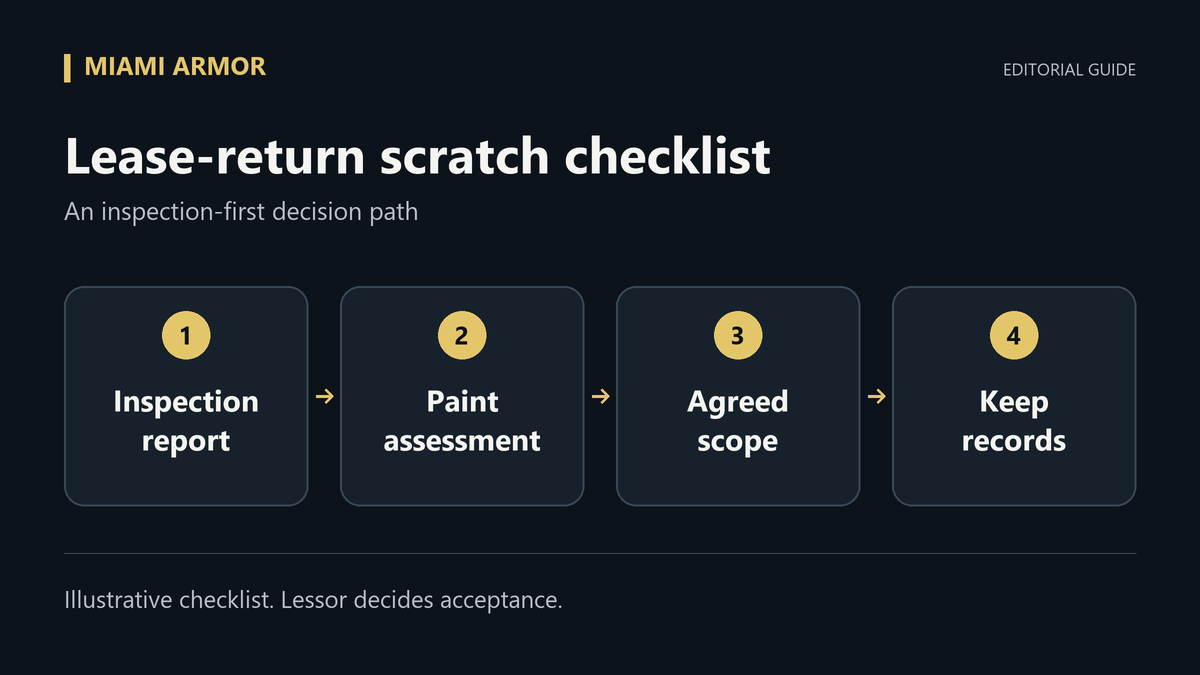
Before repairing lease return scratches, get your lessor's current wear-and-use guidance and a pre-inspection report. Then separate eligible surface marks from missing paint, dents or damaged panels. A cosmetic improvement does not guarantee lease-return acceptance or lower charges. Agree on the repair scope only after you know what the inspector has identified.
A return deadline can make every mark feel urgent. A scuff on a bumper, a narrow line beside a door handle and a dent with broken paint can look equally serious in a photograph. They do not necessarily need the same repair, and your lease company may not treat them alike. A useful plan answers two questions separately: what does the contract require, and what can this particular finish safely support?
Start with the lessor's inspection, before a repair package
Your repair provider can assess paint condition. Your lessor determines the return process and applicable wear standards. Obtain those standards from the company servicing your lease, using the account or contact details on your agreement.
BMW USA's lease-return guidance describes pre-inspection, access to a Vehicle Return Estimate and a final inspection. Its exterior guidance distinguishes some minor marks from damage needing repair. Those are BMW-specific rules; they are not a universal scratch allowance for every leased car.
Toyota Financial Services also recommends a courtesy pre-inspection to identify possible excessive wear and use. Its repair guidance tells customers to retain receipts. Confirm availability, timing and repair documentation with your own lessor rather than borrowing another manufacturer's process.
Ask for a copy of the report and an explanation of each exterior item. If you already have an inspection appointment, do not assume polishing beforehand is necessary. The report may identify a different issue from the one that catches your eye.
Separate the mark from the return requirement
Use this table to organize the assessment, rather than to diagnose scratch depth yourself.
| What you notice | Question for the repair assessment | Question for the lessor |
|---|---|---|
| A colored scuff or transfer mark | Is material sitting on the finish, or is paint missing? | Is this item identified on the report? |
| Fine swirls or light scratches | Can a small test area improve them within a safe limit? | Does this condition fall outside the applicable wear allowance? |
| A groove, chip or exposed underlying layer | Is a different repair method needed? | What repair standard and evidence are required? |
| A dent, crack, loose part or distorted bumper | Which qualified repair specialist should assess it? | Does the return process require a particular inspection or repair route? |
A fingernail catching in a mark does not settle all of these questions. Neither does a white streak: it could involve transferred material, damaged coating or both. Do not repeatedly rub, scrape or apply an unknown solvent to prove a diagnosis.
For a preliminary photo assessment, use our guide to getting a scratch repair quote from photos. The useful output is a next inspection step, not a promise of a final repair from one image.
Build a small evidence packet
Keep the information together so the lessor and repair provider can discuss the same area of the car:
- Inspection report. Include the exterior items and relevant photographs, if supplied. Keep the original report unchanged.
- Return date. Tell the provider the actual deadline and allow time for any required follow-up. Ask your lessor how completed repairs are checked.
- Vehicle and finish details. Note the model, affected panel, known repaint history, paint protection film or special finish.
- Clean, dry photographs. Take a wider panel view and close views in useful daylight. Avoid filters and photograph before attempting treatment.
- Treatment history. Record any touch-up paint, scratch remover, solvent or polishing already used. This helps explain what the assessor is seeing.
- Repair requirements. Save the lessor's answers about acceptable work, receipts and final assessment. A verbal assurance from an unrelated provider is not a substitute.
You do not need to send account passwords or unrelated personal documents for an initial cosmetic assessment. Share the relevant condition information and redact private account details from copies.
Approve a bounded repair scope
If the concern is an eligible surface defect, an inspection and test area can help establish whether correction is appropriate. Ask the provider to explain the proposed improvement and the stopping point before expanding the work.
Miami Armor's mobile scratch removal service path starts with photos and confirms the scope in person. Missing paint, rust, dents, collision damage and failed clear coat may need another specialist. Mobile availability also depends on the location and working conditions.
Separate the cosmetic goal from the lease outcome in the written scope. For example, a request to reduce the visibility of a surface scuff is different from a promise that an inspector will accept the vehicle. The provider can document its work and remaining limits; it cannot replace the lessor's decision.
Before authorizing work, ask what happens if the test indicates a different repair. A useful answer might be to stop, provide photographs and refer the panel for another assessment. It should not be an automatic escalation to more aggressive polishing.
Keep the handover useful
Save the invoice, the agreed scope and photographs of the clean, dry result. Check that the paperwork identifies the affected area and work completed. Ask the lessor how to submit it and whether another inspection is necessary.
Avoid treating a freshly improved appearance as proof that the return is settled. Final condition, documentation and the lease agreement still matter. If the inspection and repair recommendations conflict, resolve that specific item before buying a larger package.
Questions before returning the car
Must every scratch be repaired before lease return?
Not necessarily. Your lessor's current guidance, your agreement and the vehicle's assessed condition decide what is acceptable. Start with the report rather than assuming every visible mark needs paid repair.
Can polishing remove a lease-return charge?
Polishing may improve eligible surface marks, but it cannot guarantee the lessor's final decision. Confirm the requirements and documentation directly with the lessor before choosing work.
Should I apply touch-up paint before the inspection?
Ask for an assessment first. Applying material can change what the inspector or repair provider can see. If an underlying surface is exposed, obtain prompt advice about appropriate protection and repair rather than leaving it untreated indefinitely.
Can Miami Armor assess my scratches in South Florida?
Start with photographs, the affected panels, your city and the return deadline. Miami Armor can confirm the next useful inspection and whether the location and defect fit its service scope.
Have the report ready? Request a preliminary assessment from Miami Armor. Explain the cosmetic concern and the lessor's requirement separately so the next step addresses both.